Key considerations for enterprise AI hardware selection
Selecting hardware for enterprise AI workloads is not a straightforward decision. The demands of training and inference, combined with the scale of modern data centers, mean that hardware choices have a direct impact on performance, cost, and operational complexity. A structured approach helps teams evaluate options without overlooking critical factors.
Hardware for AI performance computing must handle large data throughput, low latency, and sustained parallel processing. The following checklist covers the main areas to examine when assessing systems for enterprise AI tasks.
Workload characteristics and throughput
The first step is understanding what the hardware will actually run. Training a large language model places very different demands on a system than running real-time inference for a recommendation engine. Training is typically throughput-bound, requiring high memory bandwidth and sustained parallel processing over long periods. Inference, on the other hand, often cares more about latency per request, especially in applications like fraud detection or autonomous driving.
Evaluate whether the hardware is optimized for the specific mix of operations your workloads use. Some accelerators excel at matrix multiplications common in transformer models, while others handle sparse operations better. Running a representative benchmark on the actual model or a close proxy gives a clearer picture than relying only on peak FLOPS figures.

Memory capacity and bandwidth
AI models are hungry for memory. A single large model can occupy tens or hundreds of gigabytes, and training often requires storing intermediate activations. Insufficient memory on the accelerator forces the system to spill data to system memory or storage, which cripples throughput.
Check the memory capacity per accelerator and the bandwidth between memory and compute units. High bandwidth is especially important for training, where data moves continuously between memory and processing elements. For systems that pool memory across multiple accelerators, verify that the interconnect latency and bandwidth are sufficient to avoid bottlenecks during distributed training.
Scalability and interconnects
Enterprise AI rarely runs on a single device. Scaling across multiple accelerators and nodes introduces the need for fast, low-latency interconnects. The ability to scale efficiently depends on the network topology, the bandwidth between nodes, and the software stack's ability to distribute work.
Look for hardware that supports standard high-speed interconnects such as InfiniBand or high-bandwidth Ethernet. Proprietary interconnects can offer performance advantages but may limit flexibility when integrating with existing infrastructure. Evaluate the scalability characteristics by testing with a small cluster first; linear scaling is rare, and understanding how performance degrades as nodes increase helps set realistic expectations.
AMD offers a range of products that address these scaling requirements. Their data center GPUs and CPUs are designed with open standards, making integration into heterogeneous clusters more straightforward. This approach reduces vendor lock-in and allows enterprises to mix and match components as needed.
Power consumption and cooling
AI accelerators consume significant power, and the thermal load they generate can push data center cooling to its limits. A system that delivers excellent raw performance but requires exotic cooling or draws excessive power may not be cost-effective at scale.

Consider the total cost of ownership, which includes not just the hardware price but also electricity, cooling, and facility upgrades. Look at the performance per watt for your specific workload rather than relying on peak efficiency numbers from marketing materials. Some accelerators throttle under sustained load, so testing power draw during a long training run reveals the real thermal behavior.
Software ecosystem and framework support
Hardware is only as useful as the software that runs on it. The most powerful accelerator is useless if the AI frameworks your team uses do not support it, or if the optimization libraries are immature. Evaluate the maturity of the software stack, including drivers, compilers, and integration with popular frameworks like PyTorch, TensorFlow, and JAX.
Check whether the vendor provides optimized libraries for common operations, such as convolution, attention, and normalization. Support for mixed-precision training (FP16, BF16, INT8) is essential for modern AI performance computing, as it can dramatically speed up training while maintaining model accuracy. Also consider the ease of debugging and profiling tools; a system that is fast but hard to tune can lead to wasted engineering time.
Reliability and fault tolerance
AI training runs can last days or weeks. A single hardware failure in the middle of a long job can lose all progress unless the system supports checkpointing and resumption. Evaluate the reliability characteristics of the hardware, including mean time between failures (MTBF) and the behavior under fault conditions.
Look for features like ECC memory, which corrects single-bit errors that could otherwise corrupt model weights. In large clusters, having redundant interconnects and power supplies matters. Check whether the vendor provides tools for automated fault detection and recovery, and whether the software framework can save checkpoints efficiently without stalling the entire job.
Ecosystem compatibility and future-proofing
Enterprise hardware purchases are multi-year commitments. The chosen platform should support not only current models but also emerging architectures and larger datasets. Look at the vendor's roadmap and how quickly they adopt new standards for AI compute, such as support for next-generation precision formats or novel model architectures.
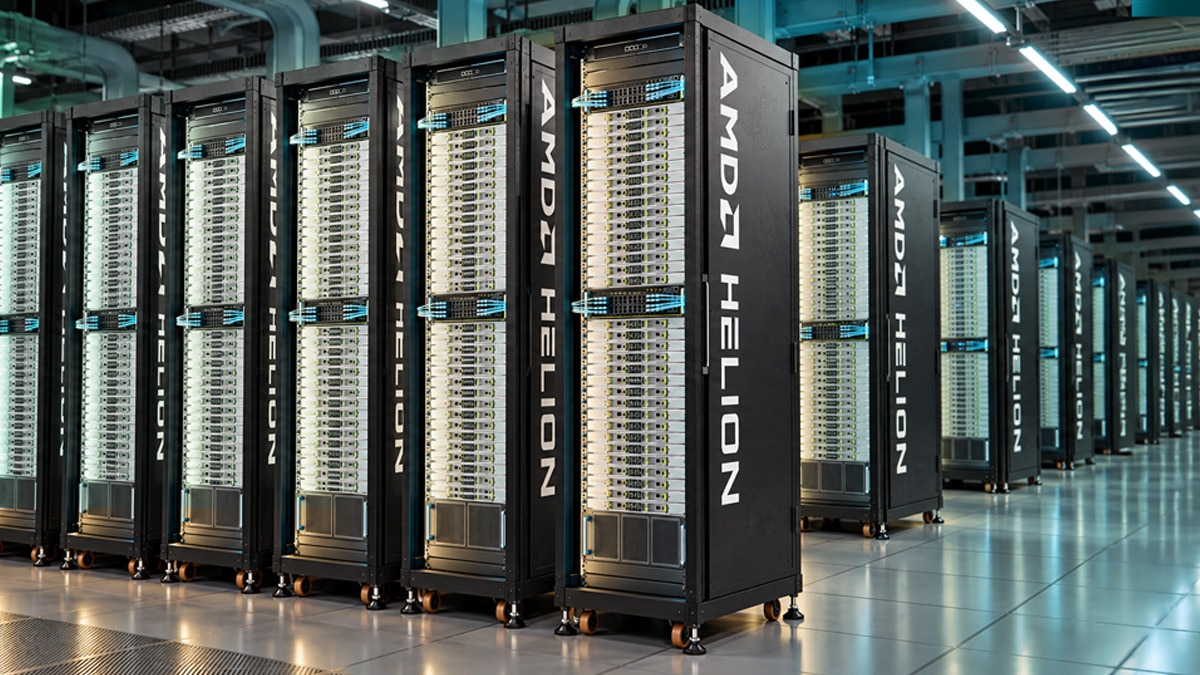
Compatibility with open standards is a strong indicator of long-term viability. Hardware that relies on proprietary interfaces may become harder to maintain as the industry evolves. Open ecosystems allow swapping components from different vendors, which can reduce costs and avoid being locked into a single supplier.
In summary, evaluating enterprise AI hardware requires a balanced look at performance, memory, scalability, power, software, and reliability. Each factor interacts with the others, and the right choice depends on the specific workloads and operational constraints. A thorough evaluation using representative benchmarks and real-world testing, combined with an understanding of the total cost of ownership, leads to decisions that support both current needs and future growth.